Learn a systematic framework for prompt engineering to move from ambiguous requests to precise, reliable AI outputs. This guide covers the core principles, a step-by-step workflow, and the critical trade-offs involved.
Multi-agent systems add cost and complexity, but are justified for specific use cases like independent verification (debate) or breaking down tasks that exceed a single model's context window (decomposition). This article provides a framework for deciding when to add a second agent.
A major new foundation model release is not a simple drop-in upgrade. This guide provides a framework for migrating your production pipeline safely, covering re-qualification, prompt auditing, and sequenced rollouts to avoid breaking changes.
A developer workflow of manually retyping LLM-generated code is gaining traction as a way to combat cognitive debt. This method offers a 2x productivity boost, not the promised 10x, but forces comprehension and helps mitigate the doubling of code churn seen in the AI era.
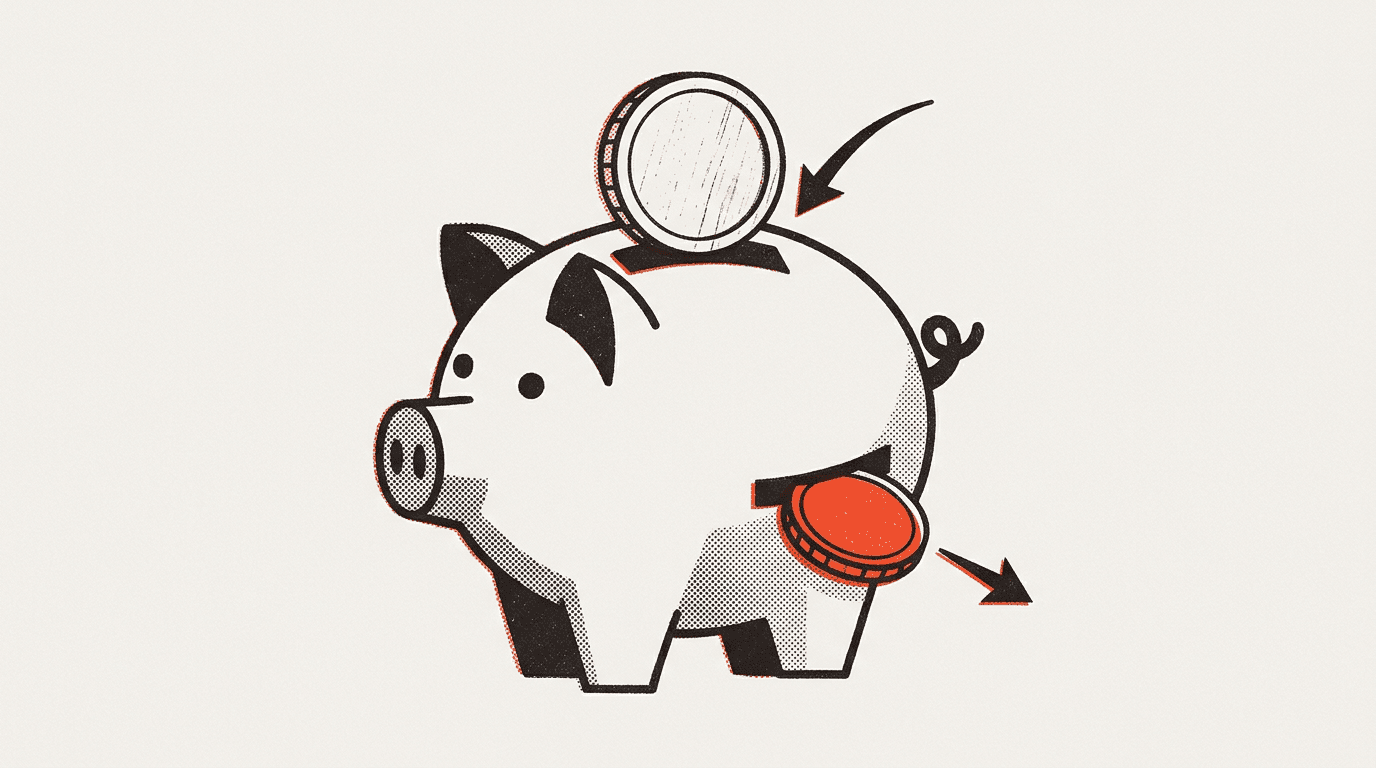
Improving the safety and helpfulness of large language models often comes at a cost to their raw capabilities. This trade-off, known as the 'alignment tax,' is a fundamental challenge in making AI systems that are both powerful and beneficial.
Developers often try to add knowledge to a large language model by fine-tuning it, a costly and often ineffective approach. A better strategy follows a clear hierarchy: start with the prompt, then use Retrieval-Augmented Generation (RAG) for facts, and only use fine-tuning to change the model's core behavior.
Large Language Models are powerful but often the wrong tool for the job. This article provides a five-point decision test to identify when a simpler, more reliable solution like a database query, a regular expression, or a classical classifier is the better choice.
Stop creating siloed "AI teams" that become bottlenecks. To scale LLM development, treat AI capabilities as a product built by your platform team, enabling product teams to innovate faster and more safely.
Vendor research shows most enterprise RAG deployments lack basic access controls, creating major data leak risks. This article details how to fix it by implementing pre-retrieval filtering in your vector database to enforce permissions before data reaches the LLM.
The "build vs. buy" decision for LLM applications is no longer a single choice. This article presents a framework for analyzing the AI stack layer by layer—from the model to evaluation—to avoid common pitfalls and focus engineering effort where it creates the most value.
Your application successfully fails over to a backup LLM provider during an outage, but your user's conversation is lost. This article explains why stateless failover breaks the user experience and details the stateful abstraction layer required to preserve conversational context, making your AI resilient in a way that users actually notice.
Traditional logging can't tell you if your LLM is getting worse. This article details the essential fields to log—from costs to verdicts—to debug silent failures, track quality, and automate up to 99% of your AI-driven workflows.
A single powerful LLM is often the most expensive and least reliable way to answer simple questions. This article explains how to build a routing layer that uses deterministic rules for simple queries, saving money and improving reliability, while reserving expensive models for the complex tasks they were built for.
Most AI agent demos are built on a simple loop that is too expensive and unreliable for production. Real-world systems use a "harness" architecture with structured workflows, checkpoints, and budgets to create agents that can survive contact with reality.
Stop asking LLMs to "respond in JSON" and hoping for the best. Schema-constrained generation eliminates parsing failures and retries by forcing the model to produce valid output, token by token.
Most RAG systems fail due to a single, overlooked setting: chunk size. This article explains how rethinking chunking as a dynamic retrieval parameter, not a static preprocessing step, can boost recall by up to 9% and why the optimal size depends entirely on your users' questions.
A RAG pilot on 200 curated documents looks magical, but scaling to 200,000 uncurated ones in production causes it to break. This article explains why recall collapses, how to fix a failing RAG pipeline, and what you should be measuring instead.