

The Cost of a Crowd
Here's a fact that should give any team pause before they add a second AI agent to their system: a two-agent workflow where the agents "talk" back and forth can easily double the number of calls made to the underlying AI models compared to a single agent doing the same job. Every one of those extra calls costs money, adds waiting time, and creates a new place for something to go wrong. That's the hidden bill behind one of the biggest trends in AI system design right now.
The trend is this: the default way to solve a hard problem with AI is no longer to reach for one bigger, smarter model. It's to use more models at once. In a "multi-agent system," several AI models work together on a single task, each handling a different piece of it or checking each other's work. This is becoming the go-to architecture for ambitious AI projects, and the reasoning behind it feels obvious: if one smart agent is good, a team of them must be better. They can specialize in different parts of a job, argue over the best approach, and catch each other's mistakes.
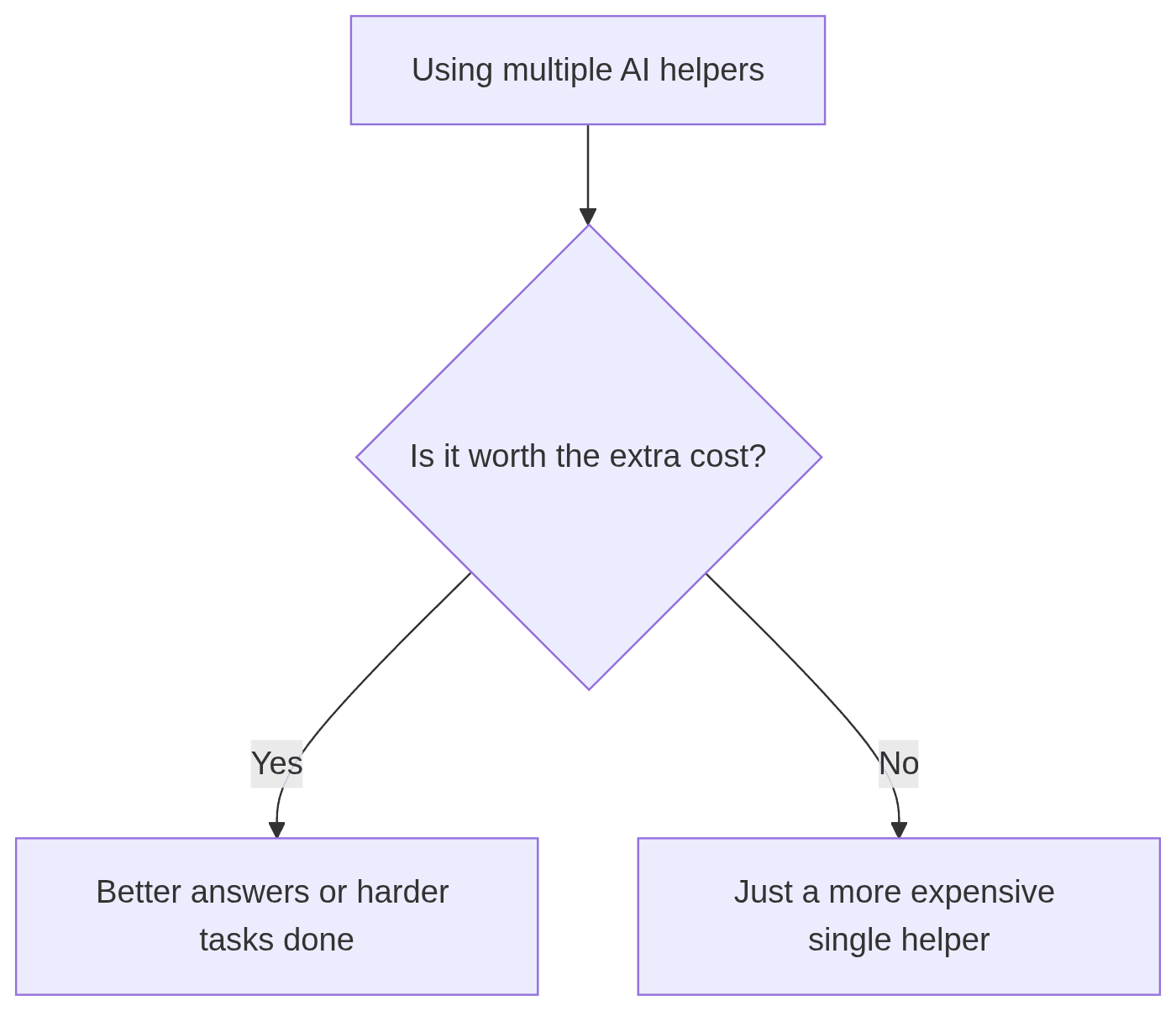
But that intuition is expensive to act on. Every additional agent you bolt onto a system increases your API costs (the fees you pay each time you call an AI model), adds communication delay as agents wait on each other's responses, and introduces new points where the whole process can break down. For a lot of problems, a multi-agent system is just a fancier, pricier way of arriving at an answer a single, well-prompted model would have given you anyway. The real question isn't whether collaboration between agents sounds good in theory - it's whether it earns back what it costs, either by improving the quality of the final answer or by making possible a task that one agent simply couldn't do alone. That's not a matter of style or preference. It's a matter of architecture and economics.
The Allure of the Swarm
The enthusiasm for multi-agent systems is rooted in a powerful analogy: the human expert team. We rarely trust a single person with a complex, high-stakes project. We assemble teams with diverse skills who can collaborate, challenge assumptions, and synthesize a solution that's more robust than any individual could produce.
AI practitioners are attempting to replicate this dynamic. The goal is to move beyond a single, monolithic model that can be a jack-of-all-trades but a master of none. Instead, you can have a "team" of AI agents. One might be a brilliant planner, another a detail-oriented code generator, and a third a relentless quality assurance tester.
This approach is already being explored in the wild. The open-source coding tool Mysti, for example, explicitly markets itself as an "AI coding team." It brings together models like Anthropic's Claude Code and OpenAI's Codex to "brainstorm mode, debate solutions, and synthesize the best approach for your code." The core idea is that models vary in their strengths and weaknesses. By having them collaborate and critique each other's output, the system can surface better solutions and avoid the idiosyncratic failure modes of any single model.
This vision is compelling. It suggests a future where we don't just prompt a single AI but orchestrate a team of them, trading a single answer for higher-quality results, more creative problem-solving, and a more resilient system. But that promise comes with a hidden price tag that many developers don't budget for.
The Unseen Costs of Coordination
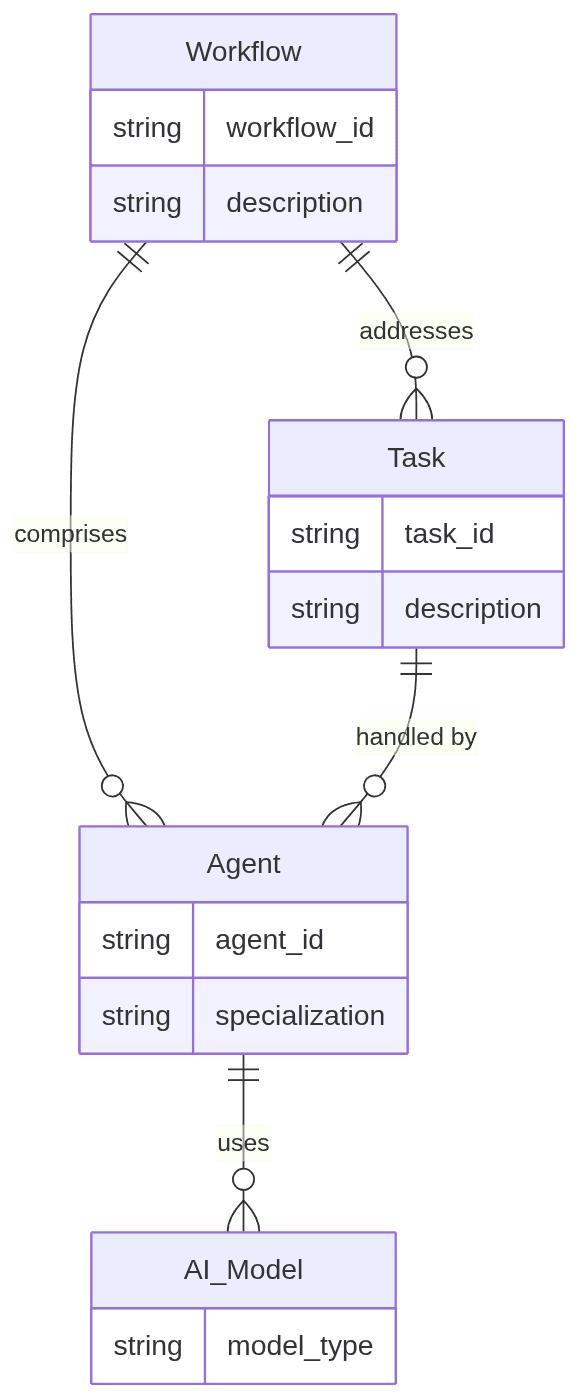
Before deploying a multi-agent system, you must account for the overhead, which falls into three main categories: cost, latency, and complexity.
Financial Cost: This is the most obvious but often underestimated factor. If a task requires five calls to a single agent, a two-agent system where they "talk" back and forth might require ten, fifteen, or even more calls to reach a conclusion. You're not just paying for the final output; you're paying for the entire conversation between the agents. This includes calls to a "manager" or "orchestrator" agent that decides which specialist agent to call next. These coordination calls, which produce no direct output for the user, can easily double your token count.
Latency: Every round-trip to an API adds time. A single agent might respond in three seconds. A two-agent system that requires three rounds of communication won't take six seconds; it will take the sum of three separate API calls plus the processing time of your own orchestration logic in between. For a user-facing application, a system that takes 15 seconds to "deliberate" is often a non-starter, no matter how good the final answer is. Parallelizing tasks can mitigate this, but many multi-agent workflows are inherently sequential, with one agent's output being the next agent's input.
Engineering Complexity: A single-agent system is simple: one input, one output. A multi-agent system is a distributed system, with all the associated headaches.
Orchestration: You need to write logic that routes requests, manages state, handles agent-to-agent communication, and decides when the task is "done." This is non-trivial code that you have to write and maintain.
Error Handling: What happens if one of your five agents fails or returns a malformed response? Does the whole chain collapse? You need to build in retries, fallbacks, and validation for every step of the interaction.
Prompt Engineering: You're no longer writing one good prompt. You're writing a suite of prompts, one for each agent, and you have to ensure they understand their specific role and how to format their output so other agents can parse it.
These costs are not a reason to avoid multi-agent systems. They are the investment you must make to unlock their benefits. The critical question is whether the return on that investment is positive.
Three Scenarios Where a Second Agent Pays for Itself
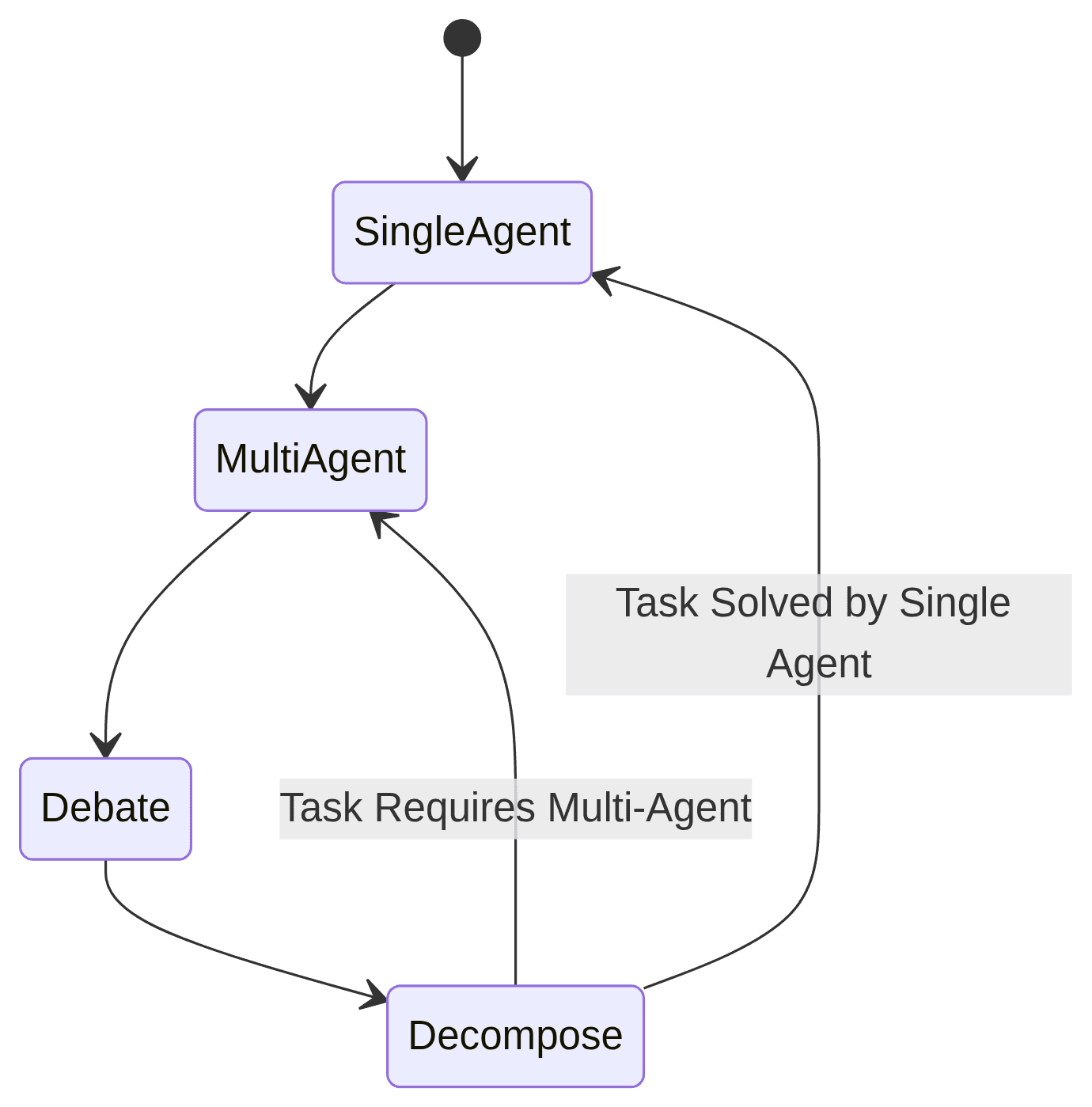
Adding a second agent is justified when it solves a problem that a single agent fundamentally cannot. There are three common patterns where this is the case.
Scenario 1: The Expert Debate for High-Stakes Problems
The most compelling reason to use multiple agents is for independent verification. When correctness is critical and the problem is open-ended, having a second agent critique the first one's work is invaluable.
This is the "debate" pattern seen in tools like Mysti. Imagine you're generating a complex database migration script. A bug could lead to data loss. In this scenario, the cost of a few extra API calls is trivial compared to the cost of failure.
A simple workflow looks like this:
Agent A (Generator): Receives the prompt ("Write a script to migrate the
userstable to the new schema") and generates the code.Agent B (Reviewer): Receives the original prompt and Agent A's generated code. Its prompt is different: "You are a senior database administrator. Review the following code, which is intended to solve the user's request. Identify any potential bugs, performance issues, or deviations from best practices. Suggest specific improvements."
Synthesis: The feedback from Agent B is either passed back to Agent A for a revision or presented to the user alongside the original code.
This pattern pays for itself because Agent B is forced into a critical stance. It's not just generating a solution; it's actively looking for flaws. This process can catch subtle errors, like non-atomic migrations or missing index updates, that a single agent might overlook in its rush to provide a complete answer.
Scenario 2: Divide and Conquer for Parallel Tasks
The second clear win for multi-agent systems comes with tasks that are "embarrassingly parallel." If you can break a large job into independent chunks that don't require communication until the final step, you can use multiple agents to drastically reduce the wall-clock time.
Consider a task like summarizing a day's worth of customer support tickets. You have 1,000 tickets.
Single-Agent Approach: Feed all 1,000 tickets to one agent (if they even fit in the context window) and wait for a single, large summary. This is slow and risks the model missing details in the middle of the massive input.
Multi-Agent Approach:
Divide the tickets into 10 batches of 100.
Spin up 10 agents in parallel. Each agent receives one batch and the prompt: "Summarize these 100 tickets, identifying the top three issues."
Once all 10 agents have completed, an "aggregator" agent receives the 10 summaries and produces a single, top-level report.
Here, the extra cost is justified by the speed. While the total number of tokens processed might be similar (or even slightly higher), the task finishes in roughly one-tenth of the time. This is a pure performance play.
Scenario 3: The Librarian for Problems Bigger Than the Context Window
Many real-world problems involve a corpus of information—a codebase, a set of legal documents, a project's full documentation—that is too large to fit into a single model's context window. Multi-agent systems can solve this by creating a "librarian" agent.
This is the pattern used by tools like Codebuff, a YC-backed CLI tool that modifies your codebase based on natural language requests. According to its creators, Codebuff uses a two-step process: it first "looks through your whole codebase" to pull relevant context, and then it "makes the edits it wants."
We can model this as a two-agent system:
Agent A (Librarian/Retriever): This agent has access to the entire codebase, likely through a vector database or search index. Its job is not to write code, but to find it. Given a user request like "Add a loading spinner to the user profile page," its sole responsibility is to find all the relevant files (
UserProfile.js,api.js,styles.css) and functions that the next agent will need.Agent B (Writer/Editor): This agent receives the user's request and the curated context provided by the Librarian. Its context window isn't cluttered with the entire codebase—only the relevant snippets. It then performs the actual coding task.
This "decomposition" of the problem into retrieval and generation is a powerful technique. It allows you to operate on vast amounts of information without requiring a model with a million-token context window. The Librarian agent pays for itself by enabling the Writer agent to do its job effectively.
Worked Example: A Multi-Agent Feature Implementation
Let's make this concrete with a pseudo-code example in Python. Imagine we want to build a system that adds a new feature to a web application based on a user request.
We'll define four agent roles:
Planner: Breaks the request into a structured plan.
BackendDev: Writes the server-side code.
FrontendDev: Writes the client-side code.
Reviewer: Checks the code for quality and consistency.
# A conceptual example. Assumes a hypothetical `call_llm` function.

def implement_feature(request: str):
    """
    Orchestrates a team of agents to implement a new feature.
    """

    # 1. Planner Agent
    planning_prompt = f"""
    You are a project manager. Break the following user request into a series of
    concrete development tasks for a frontend and backend developer.
    Output a JSON object with 'frontend_tasks' and 'backend_tasks' keys.
    Request: {request}
    """
    plan = call_llm(planning_prompt, model="claude-3.5-sonnet")

    # 2. Parallel Development
    backend_code = None
    frontend_code = None

    if plan.get("backend_tasks"):
        backend_prompt = f"""
        You are a Python backend developer. Implement the following tasks:
        {plan['backend_tasks']}
        """
        # In a real system, this would be run in parallel with the frontend task.
        backend_code = call_llm(backend_prompt, model="gpt-4o")

    if plan.get("frontend_tasks"):
        frontend_prompt = f"""
        You are a React frontend developer. Implement the following tasks:
        {plan['frontend_tasks']}
        """
        frontend_code = call_llm(frontend_prompt, model="gpt-4o")

    # 3. Reviewer Agent
    review_prompt = f"""
    You are a QA engineer. Review the following code for bugs, style issues,
    and to ensure the frontend and backend will integrate correctly.

    Original Request: {request}
    Plan: {plan}

    Backend Code:
    {backend_code}

    Frontend Code:
    {frontend_code}

    Provide your feedback as a list of suggested changes. If there are no issues,
    respond with an empty list.
    """
    feedback = call_llm(review_prompt, model="claude-3.5-sonnet")

    # 4. Synthesis / Revision
    if not feedback:
        print("Implementation complete and approved.")
        # Logic to save files...
    else:
        print("Revisions requested:")
        print(feedback)
        # Here you could loop, passing the feedback to the dev agents for revision.
This example makes the trade-offs clear. It's far more complex than a single prompt. It requires careful prompt engineering for four distinct roles and orchestration logic to pass data between them. But in return, it produces a more structured and validated result by combining specialization (frontend/backend), decomposition (planning), and verification (review).
Start with One, Add with Purpose
Multi-agent systems are not a silver bullet. They are a specialized tool for a specific set of problems. Building a "team of AIs" because it sounds impressive can leave you with a system that's slower, pricier, and no better than a single well-designed agent would have been.
So before you spin up a second agent, ask what job it's actually doing. There are three good answers:
It's a Reviewer, checking a high-stakes output before anyone acts on it.
It's a Parallel worker, taking a slice of a big job so the whole thing finishes faster.
It's a Librarian, fetching the relevant slice of a corpus that's too big for one context window.
If your reason matches one of these, the second agent will very likely earn back its extra cost in calls, time, and code. If your answer is something vaguer - "to get a better answer," with no specific mechanism attached - you're probably paying for complexity that isn't buying you anything. The practical path is to build the single-agent version first, push it as far as it will go, and only add a second agent once you can name exactly what job it does and why that job earns back the cost of adding it.