
Your LLM Bill Is a Solved Problem
If you're running a large language model (LLM)—the AI system behind chatbots, coding assistants, and countless other tools—in production, you're likely paying, over and over, for work your system has already done. Every time your application sends a request that repeats the same instructions, the same user history, or the same background documents, the model provider recomputes the whole answer from scratch and bills you for it. This repetition is now the single biggest driver of both cost and slowdown in AI applications. Between early 2024 and late 2025, the average length of a single request—measured in tokens, the small chunks of text (roughly pieces of words) that models read and generate—grew nearly fourfold. Every new feature you ship tends to make this waste worse.
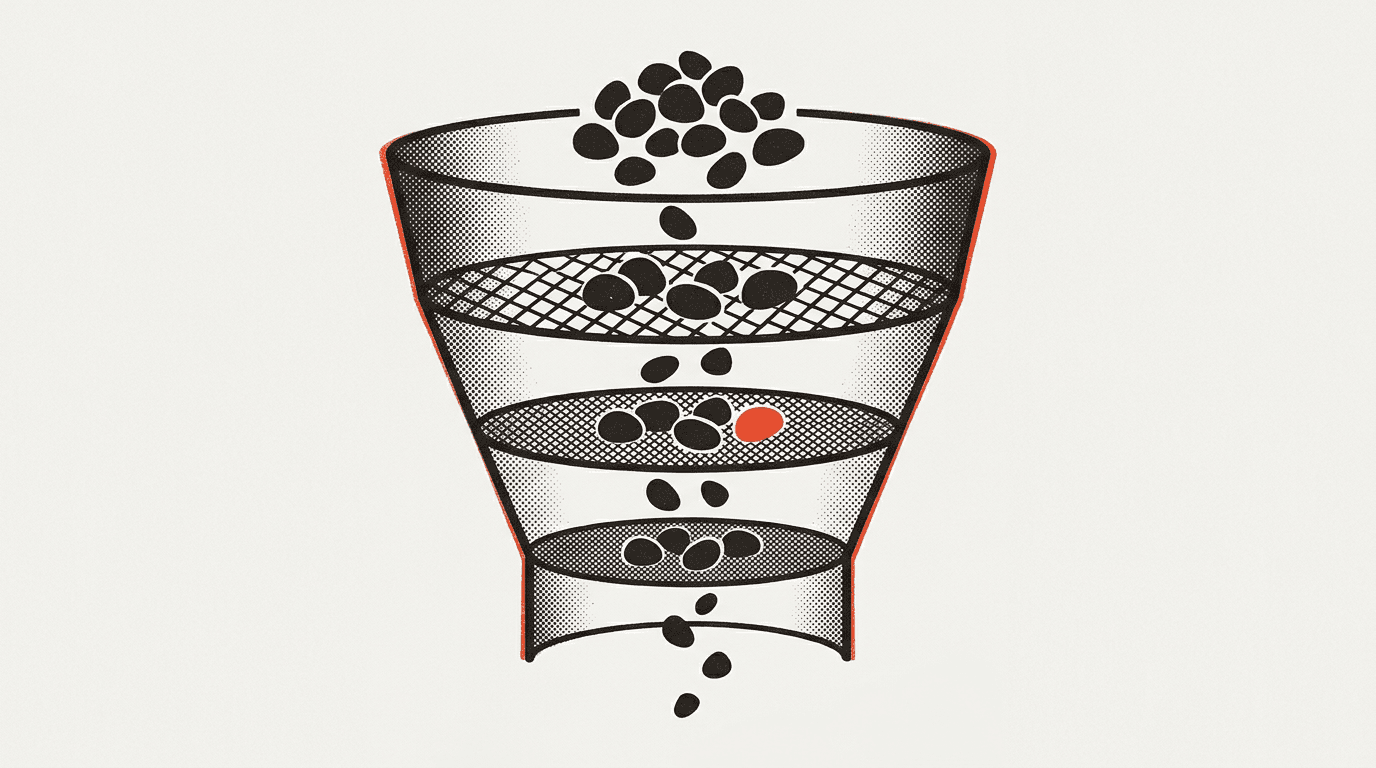
Caching fixes this. The idea is simple: save the result of expensive work the first time, then reuse it the next time a similar request comes in. Instead of a multi-second, multi-dollar round trip to a powerful model, a cache can hand back the same answer in milliseconds for a fraction of a cent. Done well, caching can eliminate a huge share of your model inference costs—one company documented cutting its total LLM spend by 70% through a single architectural change. This isn't about trading quality for speed; it's about refusing to pay twice for the same work. This article breaks down four layers of caching worth using in 2026, moving from simple provider discounts up to intelligent, meaning-aware reuse.

1. Prompt-Prefix Caching: The 90% Token Discount
Prompt-prefix caching is the lowest-hanging fruit for cost optimization, and it's offered directly by major model providers. It doesn't cache the entire response; instead, it caches the processed state of the beginning of your prompt, dramatically reducing the cost of the tokens you send on every single call.
What It Saves
This technique operates on the key-value (KV) cache, the internal memory a transformer model uses to understand the context of a prompt. When you send a 10,000-token prompt, the model performs a "prefill" step, processing all those tokens to generate this KV state before it produces a single output token. Prompt-prefix caching lets you pay for that prefill once. On the next call, if the beginning of the prompt is identical, the provider can load the saved KV state and only process the new tokens.
The savings are substantial. As of early 2026, some providers offer up to a 90% discount on cached tokens. For example, a model that costs $3.00 per million input tokens might cost only $0.30 for the cached portion. Other providers offer a 50% discount. An analysis from late 2025 found the average prompt length has ballooned to around 6,000 tokens, so caching the static parts—like a long system prompt or extensive tool definitions—yields immediate and massive savings.
What It Risks
The primary risk of prompt-prefix caching isn't quality degradation—the model's output is byte-for-byte identical to what it would have been without the cache. The risk is a low hit rate. If the static part of your prompt changes even slightly, or if it isn't at the very beginning of your token sequence, the cache will miss and you'll be charged the full price.
This forces a disciplined approach to prompt construction. The most common mistake teams make is putting the variable user query at the beginning of the prompt, invalidating the cache on every call.
How to Measure It and Make It Work
The key metric is the cache hit rate: the percentage of requests that successfully reuse a cached prefix. A low hit rate means you're not saving money; a high one can transform your unit economics. In a widely cited production case, the company ProjectDiscovery took its hit rate from a dismal 7% to a remarkable 84% by re-architecting its prompts. This single change cut their total LLM spend by 59-70%.
Achieving a high hit rate requires a strict prompt structure. The stable, cacheable content must come first, followed by the dynamic content.
Bad Prompt Structure (Low Hit Rate):
User: What's the weather in San Francisco?

System: You are a helpful assistant. Your tools are... [10,000 tokens of tool definitions]
Good Prompt Structure (High Hit Rate):
System: You are a helpful assistant. Your tools are... [10,000 tokens of tool definitions]

User: What's the weather in San Francisco?
By simply moving the static system prompt and tool definitions to the front, you make them cacheable. Every subsequent request with a different user query will reuse the processed state of that 10,000-token prefix, and you'll only pay the full price for the short user question.
2. Full Response Caching: The Exact Match
While prompt-prefix caching reduces the cost of calling the model, full response caching (also called exact-match caching) avoids the call entirely. It's the most traditional form of caching: if you've seen the exact same request before, serve the exact same response.
What It Saves
This layer saves everything: 100% of the model inference cost and 100% of the model's latency. A response that might have taken three seconds to generate from an LLM can be served from an in-memory cache in under 10 milliseconds. According to AWS, this can deliver sub-millisecond response times, improving the user experience. For applications with highly repetitive queries—like customer support bots answering common questions or e-commerce sites describing popular products—the impact is enormous. It also provides perfect consistency, guaranteeing that the same input always produces the same output, which is a critical requirement for many enterprise applications.
What It Risks
The main risk is staleness. If the correct answer to a question changes over time ("What's our top-selling product this week?"), an exact-match cache will continue to serve the old, incorrect answer until the cache entry expires or is manually invalidated.
The other risk is scope. A cache that is too broad can create serious privacy and correctness issues. If the cache key doesn't include a user ID or tenant ID, you could accidentally serve one user's private information to another. Similarly, if you update your system prompt or the model version, you must invalidate all cache entries, as the correct response to a given query may now be different.
How to Measure It
The primary metric is again the cache hit rate. Implementation is straightforward: create a hash of the incoming request content (the full prompt, model parameters, and any other relevant context) and use it as the cache key.
A robust implementation requires careful key design. The key should be a composite of:
Request content: The full prompt string.
Model parameters: The model name, version, temperature, etc.
Scope: The tenant ID and/or user ID to prevent data leakage.
Version: A version identifier for your system prompt or toolset, so you can easily invalidate the cache when they change.
By namespacing cache entries with this metadata, you ensure that you only serve a stored response when the input, the configuration, and the context are all truly identical.
3. Retrieval Caching: The RAG Accelerator
Retrieval-Augmented Generation (RAG) is a dominant pattern for building knowledge-intensive LLM applications. It works by first retrieving relevant documents from a database and then stuffing them into the prompt as context for the model. This often results in the same documents being retrieved and re-sent to the model repeatedly, wasting tokens and money. Retrieval caching targets this specific inefficiency.
What It Saves
This is best understood as a specialized application of prompt-prefix caching. The goal is to cache the processed state of the retrieved documents. When a user asks a question that retrieves the same set of documents as a previous query, you can place that document text in the cacheable prefix of the prompt.
For example, imagine a financial chatbot that retrieves a 10-page quarterly report to answer questions. If ten different users ask questions that all require context from that same report, your application is paying to send and process that same report ten times. A 2026 report from Digital Applied highlights this exact problem, noting that "retrieval pipelines re-send the same document corpus on every query." By caching the processed report, you pay for it once and get a 90% discount on the next nine queries.
What It Risks
The risk is identical to that of full response caching: staleness. If the underlying quarterly report is updated in your vector database, but your application serves a cached prompt prefix containing the old version, the LLM will generate answers based on outdated information.
This makes the cache invalidation strategy critical. The cache entry for a set of documents must be invalidated whenever the source documents are updated. This can be complex to implement, requiring a tight coupling between your data store and your caching layer, but it's essential for correctness.
How to Measure It
Success is measured by the contribution of retrieved content to the overall prompt-prefix cache hit rate. You can monitor how often requests are constructed with cached document chunks. A high hit rate here indicates that your users are frequently asking questions about the same underlying information, and the cache is successfully absorbing the redundant token costs. The breakeven point for prompt caching is extremely low; one analysis suggests that a cached prefix becomes profitable if it's read just 1.4 times on average. For RAG workloads, where the same popular documents are read constantly, the return on investment is almost immediate.
4. Semantic Caching: The Similarity Play
Semantic caching is the most advanced and powerful caching layer. It goes beyond exact matches to serve cached responses for queries that are semantically similar but not identical. If one user asks, "How do I change my password?" and another asks, "Where can I reset my login credentials?", a semantic cache can recognize they're asking the same thing and serve the same stored answer, skipping the LLM call entirely.
What It Saves
Like full response caching, this saves the entire cost and latency of a model call. But its reach is far greater. An analysis from Introl in 2025 found that 31% of production LLM queries have enough semantic similarity to be served from a cache. Other benchmarks from 2026 suggest production deployments can see hit rates between 20-45%. This turns a several-hundred-millisecond model call into a tens-of-milliseconds vector search and lookup.
The mechanism involves two steps:
When a new request comes in, its text is converted into a numerical representation called an embedding.
This embedding is used to search a vector database of previously answered questions. If a sufficiently similar past question is found, its cached answer is returned immediately.
What It Risks
This power comes with significant risks. The central challenge is that "close in embedding space" is not the same as "identical in meaning." Two questions like "What is the capital of France?" and "What is the capital of Germany?" might have very similar embeddings but require completely different answers. This is a false positive, and it's the Achilles' heel of semantic caching.
The other major risk is security. A 2026 paper on a system called LaCache highlights the danger of cache-collision attacks, where an adversary intentionally "poisons" the cache by asking cleverly crafted questions. Their goal is to make the system store a malicious response that will later be served to legitimate users asking different questions.
To mitigate these risks, several safeguards are necessary:
Similarity Threshold: This is the main tuning knob. A high threshold (e.g., 99% similarity) reduces the risk of false positives but also lowers the hit rate. A low threshold increases the hit rate but serves more wrong answers. This is a precision/recall tradeoff that must be tuned for each specific use case.
Scope and Guards: As with full response caching, semantic caches must be scoped by tenant/user. You should also implement guards to prevent caching for prompts containing sensitive entities like names, emails, or IDs. Never semantically cache personalized responses.
Advanced Defenses: The LaCache paper proposes a novel defense that moves the integrity check from the query to the response. By speculatively generating the first few tokens of a new response and checking if they match the cache, the system can detect attacks with provably high probability while preserving over 90% of the cache's utility.
How to Measure It
Measuring a semantic cache requires more than just hit rate. You also need to track precision (the percentage of cache hits that were correct) and recall (the percentage of cacheable queries that were successfully hit). A dashboard showing hit rate, latency saved, and cost saved is essential. But you also need a feedback loop, allowing users or auditors to flag incorrect cached responses, which can be used to tune the similarity threshold and identify failure modes.
When Caching Is the Wrong Answer
Caching is a powerful tool, but it's not a universal solution. Applying it in the wrong context can lead to outcomes far worse than a high bill, including privacy breaches and critical failures of trust.
According to guidance from TrueFoundry, you should never cache responses that are:
Personalized: If a response contains a user's private data, caching it—especially with a semantic cache—creates a high risk of leaking that data to another user.
Time-sensitive: For queries about rapidly changing information like stock prices, news headlines, or live inventory, a cached response is almost guaranteed to be wrong.
Stateful: In a multi-turn conversation where the correct answer depends on the preceding dialogue, caching a response from a different conversational context will lead to confusing and incorrect behavior.
High-stakes: For medical, legal, or financial advice, the cost of a wrong answer from a false semantic cache hit is unacceptably high. The consistency and reliability of a direct model call are paramount.
For these use cases, the cache should be bypassed entirely. The goal of caching is to handle the high volume of repetitive, low-stakes queries, freeing up your budget and compute for the unique, high-value requests that truly require the model's full reasoning power.
The Gateway: A Central Nervous System for Caching
Spread these four caching strategies across dozens of services owned by different teams, and you get inconsistency: one team builds prompts correctly for caching, another leaks a user's data because a tenant ID was left out of a cache key, a third serves stale answers because nobody wired up invalidation. The logic for building cache keys, expiring old entries, and tracking hit rates ends up duplicated across the codebase and drifting out of sync between teams.
The fix taking hold in production architectures is to centralize this logic in an AI Gateway: a layer that sits between your applications and the model providers, intercepting every request before it goes out. Placed there, a gateway can:
Apply prompt-prefix caching automatically to every outgoing call, so no individual team has to remember to structure prompts correctly.
Manage a shared semantic cache, scoped by tenant and application, with similarity thresholds and safeguards set once and enforced everywhere.
Provide centralized observability—one dashboard for hit rate, cost savings, and latency improvements across the entire organization, instead of numbers scattered across teams.
Enforce hard rules that bypass caching for sensitive or high-stakes routes, so no single developer can accidentally cache a medical, legal, or personalized answer.
The tradeoff to watch: a gateway becomes a single point of failure, and a misconfiguration there—a similarity threshold set too loose, a missing scope check—can affect every application behind it at once, not just one team's service. Get it right, though, and caching stops being something each team reinvents and re-debugs on its own. It becomes infrastructure: developers build features, while the gateway quietly decides, call by call, whether the honest answer is "we already know this" or "ask the model."